
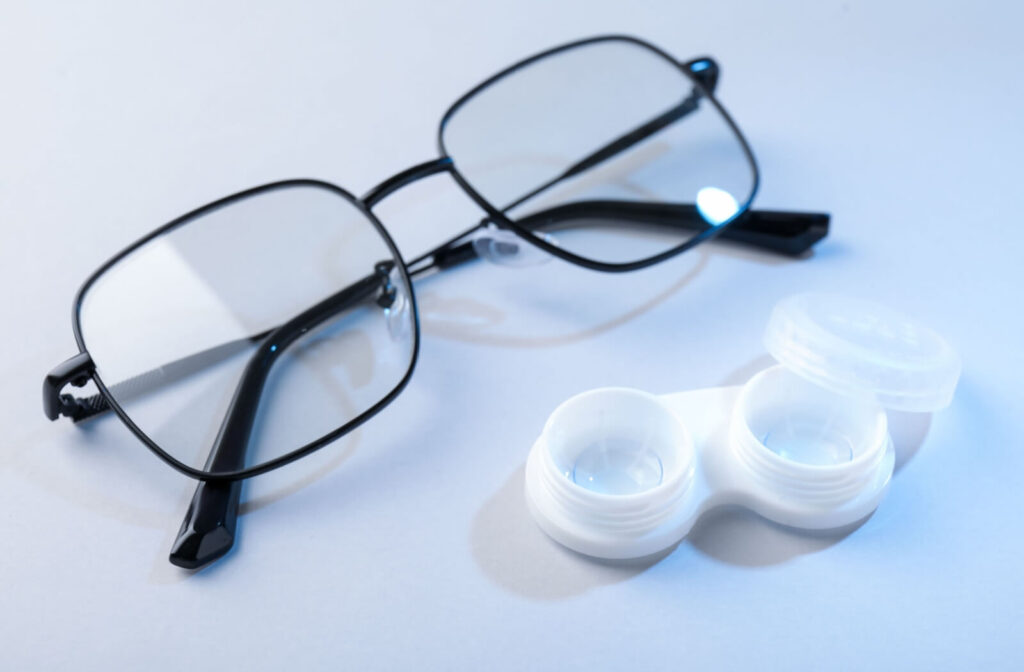
It’s a common question at Bethany Eye Care: after an eye exam, can you use your new glasses prescription to order a fresh supply of contact lenses? After all, they both help you see clearly, so the numbers should be the same, right?
The simple answer is no—your contact lens and glasses prescriptions are different. They each contain specific information tailored to how you wear them, ensuring your vision is sharp and your eyes stay comfortable all day long.
Why Your Prescriptions Aren’t Twins
The main reason for the difference is distance. Your glasses sit a little bit away from your eyes, held in place by the frame on your nose and ears. This small gap might not seem like much, but it changes how light focuses through the lens.
Contact lenses, on the other hand, rest directly on the surface of your eye. Because there is no distance between the lens and your eye, the power required for clear vision changes. The prescription must be adjusted to account for this closeness.
What a Contact Lens Prescription Includes
Special Measurements for a Custom Fit
A contact lens prescription includes details that your glasses prescription doesn’t. Contacts need to fit your eye perfectly. To do this, the prescription includes a few key measurements:
- Base Curve (BC): This number matches the curve of your cornea. A proper base curve helps the lens sit smoothly on your eye without moving around too much.
- Diameter (DIA): This is the width of the contact lens. The right diameter ensures the lens is large enough to be comfortable and provide clear vision.
The Right Lens Brand & Material
Your contact lens prescription also names a specific brand and type of lens. This is because not all contacts are made the same. Different materials allow different amounts of oxygen to reach your eye, which is a big factor in keeping your eyes feeling good.
Some materials are better for people who experience dry eyes, while others are designed for long hours of wear. The prescription makes sure you get the exact lens that works for your eyes and your lifestyle.
Why the Power Numbers Change
Since contacts sit on your eye, the power—or strength—of the lens is often different from your glasses prescription. For example, a prescription of -4.00 in glasses might be adjusted to -3.75 for contact lenses.
If you have astigmatism, the correction for it may differ between your two prescriptions. The goal is always the same—to provide you with crisp, comfortable vision, whether you reach for your glasses or put in your contacts.
Get the Right Fit with a Contact Lens Exam
What to Expect During Your Fit
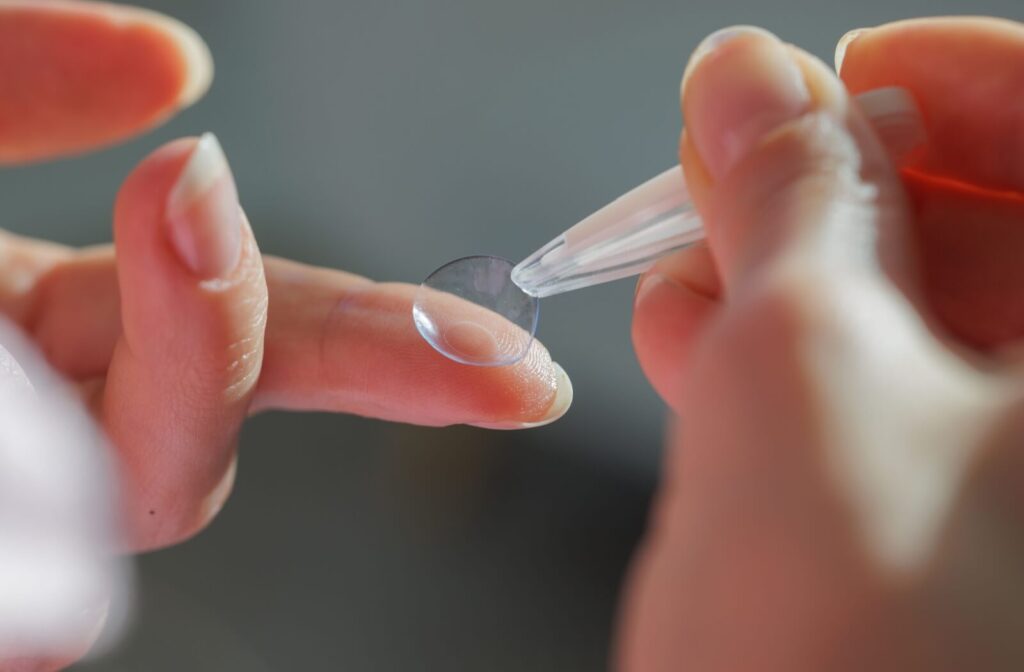
A contact lens exam includes additional steps beyond a standard eye exam. The doctor takes precise measurements of your eye’s surface to determine the right lens size and shape for you. You then get to try on trial lenses to check for comfort and clear vision.
A key part of the fitting is a lesson on how to handle your new lenses. You learn how to safely put them in, take them out, and clean them properly. This helps you feel confident as you start to wear them on your own.
Can Anyone Wear Contacts?
Many people can enjoy the freedom of contact lenses, but some eye conditions require special attention. For instance, if you have very dry eye or certain allergies, some lens types may be more comfortable than others. Your eye doctor can help you find options that suit your vision needs.
Explore Your Contact Lens Options
Lenses for Everyday Life
You have many types of contact lenses to choose from. Soft lenses are made of a flexible material that many people find very comfortable right away. Another option is rigid gas permeable (RGP) lenses, known for providing exceptionally sharp vision.
Lenses for Specific Vision Needs
There are also specialty lenses available. Toric lenses are designed with a specific shape to correct astigmatism, while multifocal lenses work much like progressive glasses. They have different zones for near and far vision, helping you read a book or see down the road without switching to glasses.Understanding the differences between your prescriptions is the first step toward clear and comfortable vision with both glasses and contacts. Whether you are ready for a contact lens fitting or have questions about your family’s eye health, the team at Bethany Eye Care is here to help. Schedule a visit to find the right solutions for you.