
Picking out your child’s first pair of glasses is a big moment, and plenty of kids treat a wall of frames like a candy store. Once a children’s eye exam shows your child needs glasses, you get to explore frames in nearly every color a kid could dream up.
A little planning can make the choice feel easy. The right pair of kids’ glasses fits snugly without pinching, keeps your child’s eyes centered in each lens, uses lightweight and impact-resistant lenses, and comes in a style your child wants to wear.
How to Get Your Child Excited About Glasses
Kids tend to feel braver when they know what’s coming. Talk with your child about how glasses can help them spot the ball faster at recess or read the board from the back row.
Bedtime stories can help too. Grab a picture book about a character who gets glasses, or point out people your child looks up to who wear glasses every day, like a favorite superhero’s secret identity. Or maybe even their grandma or grandpa!
Plan your trip for after a nap and a snack. Let your little one bring a favorite stuffed animal, who might have some strong opinions about frames too. Then step back and let your child pick a style that shows off their personality, even if that means sparkly purple with glitter on the arms.
How to Find the Right Size Glasses for Your Child
Look inside the arm of a frame and you’ll see 3 numbers, like 48-16-125. They measure the frame in millimeters, covering the lens width and bridge width, then the length of the temple, which is the arm that rests behind the ear. If your child has a strong prescription, a smaller frame can help keep the lenses thinner and lighter.
Once the new glasses arrive, check the fit at home with these quick signs:
- The frame rests on the nose without slipping or pinching.
- The temples sit behind the ears without pressing into the skin.
- The lenses stay clear of the eyebrows and cheeks.
- Your child’s eyes line up with the center of each lens.
Properly centered glasses let your child look through the part of the lens that holds their prescription. If the frame sits too low, kids may peek over the top, and that won’t help anyone see more clearly!
Kid-Friendly Frame Features to Look For
You don’t need us to tell you that kids put their belongings through the wringer. Glasses are no different, so a few design details can make everyday wear easier.
Flexible & Hypoallergenic Frame Materials
Bendy, rubberized frames can stand up to cartwheels and games of tag.
If your child has a nickel allergy, their skin may get itchy and red where metal frames touch. Look for hypoallergenic frames instead.
Nose Bridges & Temples for Small Faces
Young kids don’t have a well-defined nose bridge yet, so their glasses can slide down. Ask your optician about frames with a wider bridge or adjustable nose pads.
Cable temples curve around the ears to help glasses stay in place on younger kids. For toddlers, an elastic strap can keep glasses on through snack time and story time.
Spring Hinges for Active Kids
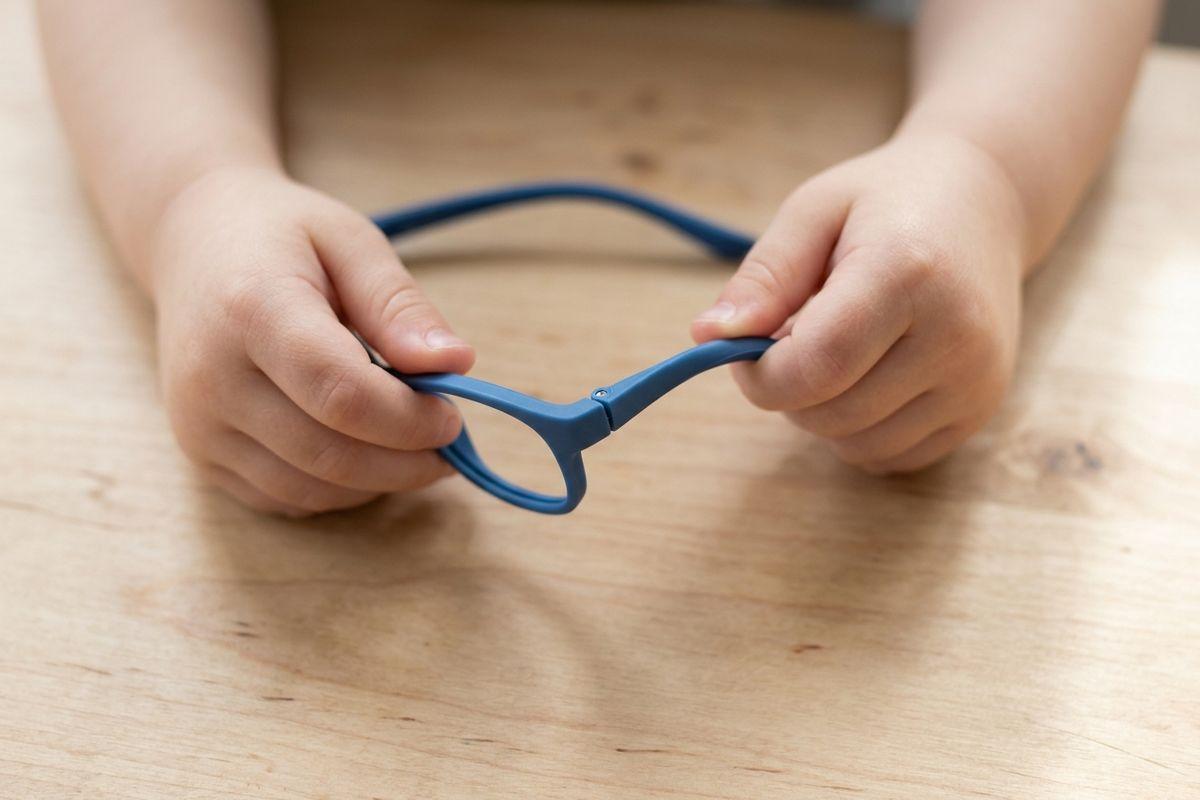
Spring hinges let the temples flex outward without bending out of shape. That can mean fewer repairs, which helps with toddlers and kids who fall asleep in their glasses.
Which Lenses Work Well for Kids?
Your child’s lenses need to keep up with recess and the occasional drop on the floor.
Polycarbonate and Trivex Lenses
Busy kids do well with tough lenses. Polycarbonate and Trivex lenses are lightweight and impact-resistant, with built-in UV protection, and they can come with a scratch-resistant coating. Glass lenses are heavy and breakable, so these two materials make a smart pick for little ones on the move.
Lens Options for Sun and Screens
Photochromic lenses darken outside and clear up indoors, so your child can go from the soccer field to the classroom with one pair. For beach days and snowy afternoons, kids’ sunglasses with UV protection make a fun add-on.
If your child spends time on tablets, ask the team about blue light lenses.
How to Protect Your Child’s Glasses and Eyes
Kids and glasses go through a lot together, especially once sports season starts.
Everyday glasses aren’t designed for game day. Sports goggles with polycarbonate lenses can help prevent many sports-related eye injuries, and prescription versions can help your child see the ball clearly. Some kids like contact lenses for sports or as a break from glasses. Contacts don’t protect the eyes from impact, though, so your child still needs goggles over them.
Warranties and Backup Pairs
A warranty can cover breaks and heavy scratches. For kids with strong prescriptions, a spare pair can keep them seeing clearly during repairs, so ask us about discounts on a backup.
And if a frame gets bent, bring it in for an adjustment before anyone reaches for the pliers.
Finding Glasses Your Child Will Love to Wear
Picking out glasses can become a fun family outing, especially once your child spots a frame that makes them smile in the mirror. Our opticians can help your child try on frames until one feels just right.
Our optometrists explain your child’s results in plain language, so you leave knowing what’s going on with their eyes. At Bethany Eye Care, you might hear laughter from down the hall.
Book your child’s eye exam and let us help your little one find a pair they can’t wait to put on.